A Recipe Blog Adds a Data Broker and a Video Ad Network Between Two Visits
Sites change their trackers all the time, and nobody tells their readers. A new ad deal, a new plug-in or a theme update can add a company to every page overnight. The Last visit section is there to catch that.
This case study uses a made-up recipe blog whose page changes between visits. The first time it’s opened in Watchkeeper, the panel counts three other sites: an analytics service, an ad pixel and the ad partner the pixel calls. On the next visit the same soup recipe tells five.
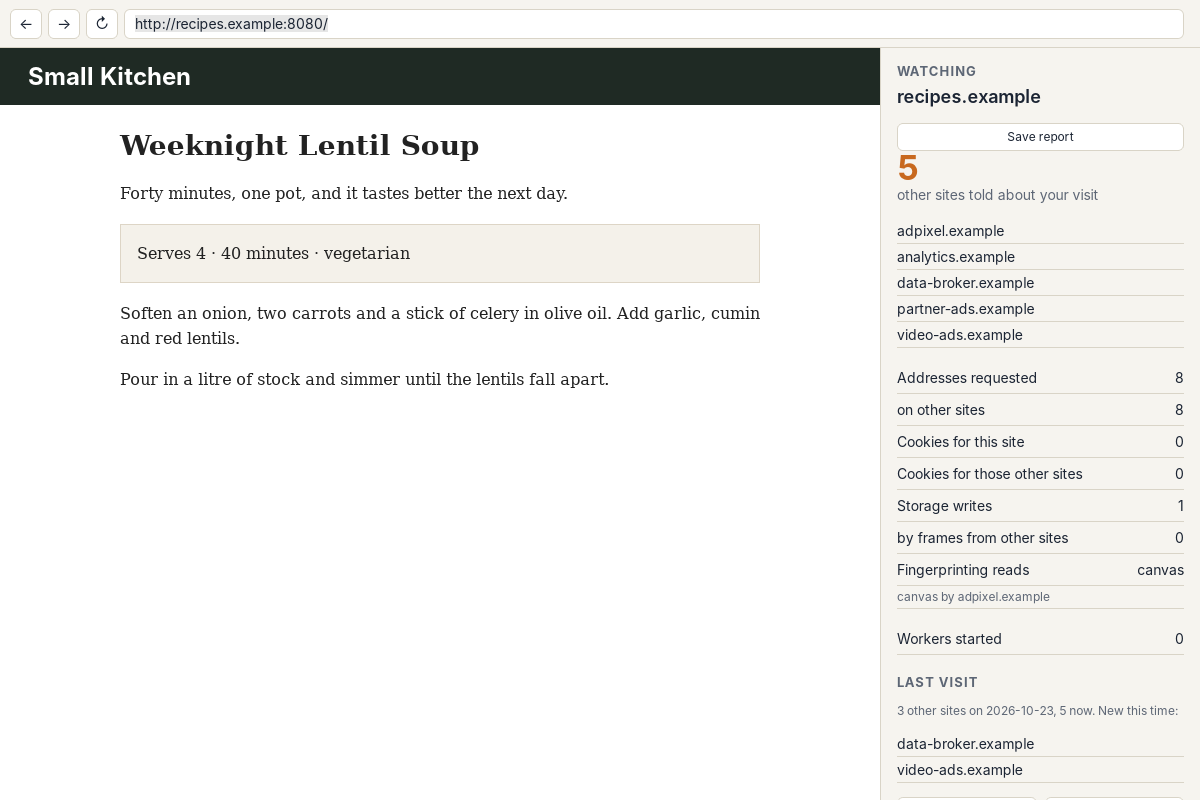
The made-up recipe blog on its second visit. The two new names are at the bottom of the panel.
The Two Newcomers
The first is a video ad network, which loads a script and asks its server for an ad. The other is the one worth noticing: a data broker, reached through a one-pixel image. A pixel like that carries no ad and draws nothing. It exists to tell the broker that someone read this page.
Neither shows up anywhere on the page. The recipe looks exactly the same on both visits.
How Watchkeeper Knows
For each site you open, Watchkeeper keeps a short record on your computer: the date, the counts, and the names of the other sites the engine itself saw being contacted. It doesn’t keep addresses, cookies or anything you typed. On the next visit the panel puts the old count next to the new one and lists the names that weren’t there before. Forget this site removes the record, and the reference says exactly what it holds.
A reader can’t do much about a new tracker except notice it. A site owner can, and the same check on your own site after a plug-in update takes a minute.
Try It
The blog is one of Watchkeeper’s case study pages. Its script adds the two new sites from the second visit on, so opening it twice shows the same panel.